
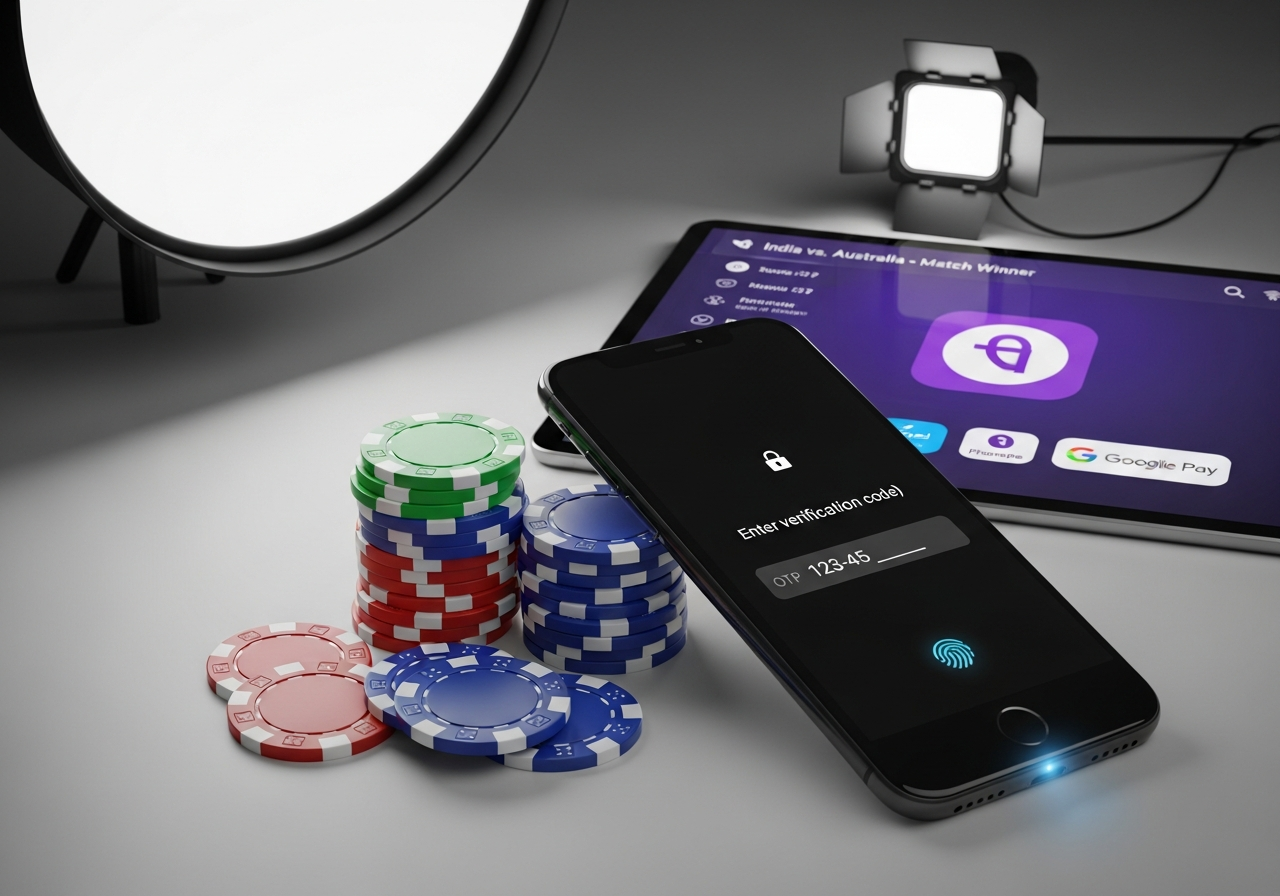
Online betting in India has grown exponentially, with millions of players depositing funds through UPI, cards, and mobile wallets to place bets on cricket matches, football leagues, and casino games. Yet this rapid expansion comes with a hidden cost: your betting account is now a prime target for cybercriminals. Account takeovers, payment fraud, and identity theft threaten not just your winnings but also sensitive personal data—PAN numbers, Aadhaar details, and banking credentials stored by operators during KYC verification.
Two-factor authentication (2FA) is a straightforward yet powerful defense against these threats. By adding a second verification step beyond your username and password, 2FA makes unauthorized access dramatically harder, even if attackers manage to steal your login credentials. For Indian bettors handling frequent UPI transactions and storing personal information with operators, enabling 2FA is no longer optional—it’s essential. This guide explains what 2FA does, which threats it neutralizes, how to set it up, and how to combine it with other security practices to protect your bankroll and identity.
The New Reality of Online Betting Security for Indian Players
The number of Indians using online sportsbooks and casino apps has surged, with daily active bettors accessing platforms via mobile devices to place in-play bets on matches, deposit through UPI, and manage growing account balances. This convenience comes with concentrated risk: betting accounts now hold significant funds and are linked to multiple payment methods and highly sensitive personal documents. Attackers exploit this by targeting betting accounts specifically, viewing them as accessible gateways to steal both money and identity data.
Cyberattacks, database breaches, and account takeover fraud are no longer rare edge cases—they’re common operational hazards in the online gambling space. Recognizing this, regulators in mature markets like New Jersey and Michigan have begun mandating strong authentication (2FA/MFA) for online casinos as a licensing requirement. This regulatory trend signals the direction that serious operators worldwide, including those serving Indian bettors, will follow. Even where regulation is fragmented, leading platforms adopt international security standards to maintain trust and protect themselves from liability.
Why Betting Accounts Are Prime Targets for Hackers
Betting accounts attract attackers for several compelling reasons:
- Stored funds and active wallets: Unlike static email accounts, betting platforms hold liquid money ready for withdrawal or play, making them immediately profitable targets.
- Linked payment methods: Accounts are connected to UPI IDs, debit cards, and credit cards, allowing attackers to execute fraudulent withdrawals or place unauthorized bets using your balance.
- Personal KYC documents: Players upload PAN cards, Aadhaar proofs, and bank statements during registration, providing identity details that criminals can weaponize for synthetic identity fraud or secondary extortion.
- Continuous login activity: The betting experience involves frequent logins, session refreshes, and device changes, which naturally increase exposure to phishing attempts and man-in-the-middle interception.
- Money laundering potential: Compromised accounts can be leveraged to launder illicit money through betting markets, making them valuable to organized crime networks.
Where India Fits into Global iGaming Security Trends
Jurisdictions like New Jersey and Michigan require all licensed online casinos to implement multi-factor authentication as part of their cybersecurity framework. These standards aren’t arbitrary—they reflect industry consensus that 2FA significantly reduces account takeover success rates and supports regulatory compliance.
For Indian bettors, the lesson is clear: waiting for local regulation to mandate 2FA is a mistake. Adopting strong authentication proactively protects your account today and ensures you’re using platforms aligned with international best practices, regardless of whether India’s regulatory environment has yet formalized such requirements.
What Two-Factor Authentication Actually Does for Your Betting Account
Two-factor authentication requires two different verification factors to access your account, rather than relying solely on a username and password. These factors fall into three categories: something you know (a PIN or password), something you have (a phone or hardware token), and something you are (a fingerprint or face scan). By combining two of these—typically a password plus an OTP or biometric—2FA creates a barrier that attackers cannot easily bypass.
The practical value for betting accounts is substantial. Even if your password is leaked in a data breach, cracked through brute-force attack, or phished from a fake bonus email, attackers cannot log in without the second factor. This dramatically reduces account takeover risk and prevents unauthorized withdrawals, illicit bets, or misuse of your stored KYC documents.
| Security Factor | What it means | Benefit for Indian bettors |
|---|---|---|
| Password (first factor) | Something you know; username + password combination | Standard but insufficient alone; easily compromised via phishing or data breaches |
| SMS OTP (second factor) | One-time passcode sent to your registered mobile number | Quick, familiar to Indian users via banking apps; vulnerable to SIM swap and SMS interception |
| Authenticator app (TOTP) | Time-based code generated offline by an app like Google Authenticator; no internet needed | Phishing-resistant; works offline; less vulnerable to SIM swap; ideal for mobile-first betting |
| Email code (second factor) | One-time code sent to your registered email address | Reduces SIM-swap risk; requires email security; slower than SMS but more phishing-aware |
| Biometric (fingerprint/face) | Unlock via fingerprint or face recognition on your device | Fastest, most convenient for frequent in-play betting; no codes to type; tied to your device |
| Push notification approval | Approve login from an authenticator app with a single tap | Combines security with speed; clearly shows if a stranger is trying to access your account |
How 2FA Works Step by Step on Popular Betting Apps
The typical login flow is straightforward. You open the betting app or website and enter your username and password as usual. The platform recognizes your credentials and, if 2FA is enabled, prompts you to complete the second factor—either by entering an OTP sent via SMS or email, approving a push notification on your linked authenticator app, or scanning your fingerprint.
Once you authenticate both factors, you gain access to your account, wallet, and active bets. Beyond initial login, many platforms now require 2FA for high-risk actions: withdrawing funds, adding a new payment method, resetting your password, or logging in from an unrecognized device. This layered approach means that even if an attacker gains temporary access to your password, they cannot complete sensitive transactions without the second factor.
Key Threats Indian Bettors Face – and How 2FA Neutralises Them
Several attack types pose serious risks to betting accounts. Understanding how 2FA defends against each one clarifies why enablement is non-negotiable:
- Phishing: Attackers send fake emails mimicking your betting platform with messages like “Claim your bonus now” or “Verify your account” linked to fake login pages. They capture your password but cannot proceed without the second factor.
- Credential stuffing: Criminals use password lists from previous breaches (LinkedIn, Facebook, etc.) to automatically test accounts across betting sites. Even if one password works, 2FA blocks login completion.
- Brute-force attacks: Attackers systematically try common password combinations. 2FA stops them at the second step, making brute-force impractical at scale.
- Keyloggers and malware: Malicious software installed on your device or shared computer captures keystrokes and passwords. 2FA (especially biometric or push-based) bypasses typed passwords entirely.
- SIM swap and OTP interception: Attackers convince your telecom provider to transfer your phone number to a SIM in their possession, intercepting SMS OTPs. Using authenticator apps instead of SMS 2FA mitigates this risk.
- Man-in-the-middle (MITM) attacks: On public Wi-Fi, attackers intercept data between your device and the platform. 2FA ensures that stolen credentials alone cannot complete login.
2FA reduces the success rate of automated and account-takeover attacks by requiring a second verification step that attackers cannot easily obtain or bypass remotely.
Phishing and Credential Stuffing Against Betting Logins
Phishing campaigns targeting bettors are common and convincing. An email might claim you’ve won a bonus or your account needs urgent verification, linking to a fake site that looks identical to the real platform. Once you enter your username and password, the attacker has your credentials—but without 2FA, they cannot access your account. They’ll try to log in and immediately hit the second-factor prompt, which they cannot complete. Your account remains secure.
Credential stuffing operates similarly. Attackers obtain a list of usernames and passwords from a leak on a forum or dark web marketplace and test them against betting platforms using automated tools. If your password is reused from another breached service, it might work for the first factor, but 2FA blocks the login instantly. This is why many Indian bettors using the same password across multiple sites are still protected at betting platforms that enforce 2FA.
Brute-Force, Keyloggers and Man-in-the-Middle on Public Wi-Fi
Betting from public Wi-Fi—cafés, stadiums, or airports—exposes you to interception attacks. Attackers on the same network can monitor traffic, capture passwords in transit, or even perform man-in-the-middle attacks to redirect you to a fake betting site. Additionally, shared devices (such as internet café computers or borrowed phones) may have keyloggers installed, recording every keystroke including your password.
2FA compensates for these scenarios. Even if a keylogger captures your password, the attacker cannot complete login without physical access to your phone (for an OTP or authenticator app) or your biometric. Similarly, on compromised networks, 2FA ensures that intercepted passwords alone are useless. The second factor acts as a failsafe, protecting you even when your first-factor security is breached.
Financial and Identity Risks Unique to Indian Bettors
Indian bettors face a particularly acute exposure to financial and identity fraud. When you register on a betting platform, you provide highly sensitive information: PAN (Permanent Account Number), Aadhaar card, bank account or UPI ID, and sometimes a selfie or address proof. Operators store this data in their systems, where it’s a target for breach, insider theft, or misuse.
If an attacker takes over your account, they don’t just steal your betting balance—they gain access to this personal information. This can lead to identity theft (opening fraudulent bank accounts or loans in your name), synthetic identity fraud (combining your real and fake data to create a new credit profile), payment fraud through your linked UPI or cards, and reputational damage if your account is used for illegal activities. In some cases, fraudsters trace withdrawn funds back to legitimate bettors, creating legal complications.
How 2FA Protects Your UPI, Cards and KYC Documents
2FA significantly reduces these risks in several concrete ways:
- Preventing illicit withdrawals: Attackers cannot execute UPI or card withdrawals without completing the second factor, dramatically lowering the chance your balance is stolen.
- Safeguarding payment credentials: Even if your betting account is compromised, 2FA prevents attackers from adding new payment methods, changing UPI details, or accessing tokenized card data stored by the operator.
- Protecting KYC documents: If your account is taken over, the attacker cannot download or export your uploaded PAN, Aadhaar, or address proof files to use in identity fraud schemes elsewhere.
- Reducing fraud risk exposure: Strong 2FA makes your account a less attractive target, encouraging attackers to move on to easier prey, leaving your identity documents relatively safer within the operator’s system.
Combined with operator-side KYC/AML processes, 2FA ensures that even if someone accesses your account temporarily, they cannot convert stolen access into tangible financial or identity theft in the real world.
Fair Play, Proxy Betting and Bonus Abuse: The Integrity Angle
2FA isn’t solely about protecting individual bettors—it also supports fairness and integrity of the betting ecosystem. Several types of fraud harm both operators and honest players alike.
Proxy betting occurs when one person places bets on behalf of another (often using false identity or evading geographic restrictions). Multi-accounting exploits welcome bonuses by creating multiple accounts to claim overlapping offers. Underage access is enabled when accounts are shared or stolen and used by minors. These abuses lead to inflated chargeback rates, unfair advantage for bonus-hunting syndicates, and regulatory scrutiny that ultimately drives up costs for all players.
Strong authentication (especially when combined with biometric or device-binding measures) directly reduces these harms by tying access to a verified identity and consistent device, making it harder to operate multiple shadow accounts or bet on behalf of others.
| Fraud type | How it harms bettors and operators | How 2FA/MFA helps |
|---|---|---|
| Proxy betting | Allows unauthorized persons to use accounts, bypassing geo-restrictions and identity checks; erodes fair play | 2FA + device binding make it harder to use an account from multiple locations or devices without the original owner’s approval |
| Multi-accounting for bonuses | Fraudsters claim overlapping welcome bonuses, draining operator margins and reducing bonuses for honest players | Strong 2FA reduces the ability to create and manage multiple accounts linked to different identities; operators detect suspicious patterns faster |
| Underage access | Minors use stolen or shared accounts to gamble, exposing operators to liability and harm to young users | 2FA tied to phone/biometric makes it risky for minors to access; changes to account access (new device/SIM) are flagged |
| Cross-border arbitrage betting | Syndicates abuse betting odds and market inefficiencies across jurisdictions; exploited by organized fraud groups | Consistent 2FA + KYC enforcement ties accounts to verified location and identity, limiting arbitrage opportunities |
Proxy Betting and Location Restrictions
In strict markets, offshore betting platforms must enforce location restrictions to avoid facilitating illegal gambling. However, some Indian bettors use proxies, VPNs, or intermediaries to bypass these controls and access restricted platforms. 2FA, especially when combined with device-binding and biometric checks, makes proxy betting riskier. If an account is accessed from an unauthorized location, the platform can flag the 2FA attempt or require re-verification, alerting the original account holder and the operator.
For honest Indian bettors using legitimate offshore platforms, strong 2FA means their accounts cannot easily be hijacked and used for proxy betting by others. It also supports cleaner market integrity reporting (RTP and fairness metrics) because operators have better certainty that bets are placed by the verified account owner, not intermediaries.
Multi-Accounting, Bonus Abuse and Impact on Honest Players
Welcome bonuses are a major draw for new bettors, but they’re also a target for bonus-hunting syndicates that create multiple accounts to claim overlapping offers. Each new account should be linked to a unique identity, but weak authentication makes it easy to create shadow accounts using similar names or borrowed payment methods. Strong 2FA + biometric authentication makes this much harder because each account would require a separate phone, email, or biometric profile—raising the operational cost for fraudsters.
When operators successfully reduce bonus abuse through 2FA and identity binding, they retain more margin and can invest in better promotions for honest players. Indian bettors benefit from more generous and sustainable bonuses when the platform isn’t hemorrhaging money to fraud.
Popular 2FA Methods on Betting Sites – and Their Pros & Cons for Indians
Betting platforms offer several 2FA methods, each with trade-offs between security, convenience, and suitability for Indian users.
- SMS OTP (text message): Familiar to all Indians via banking apps; no setup required beyond a phone number. However, SMS is vulnerable to SIM swap attacks (if a criminal convinces Airtel, Jio, or Vodafone to port your number) and poor network conditions in rural areas may delay message delivery. Best as a fallback, not primary method.
- Email code: Sent to your registered email address; reduces SIM swap risk since attackers would need to compromise both your phone and email. Slower than SMS (must open email app or browser) and vulnerable to phishing if your email password is weak. Good middle-ground option.
- Authenticator app (Google Authenticator, Microsoft Authenticator, Authy): Generates time-based codes (TOTP) directly on your phone without internet. Highly resistant to phishing and SIM swap; works offline; ideal for frequent mobile bettors. Requires more setup upfront and care if you lose your phone, but strong security.
- Push notification approval: Your authenticator app sends a notification; you approve or deny the login attempt with a single tap. Combines speed with security—you see instantly if someone unauthorized is trying to access your account. No codes to type; excellent UX for in-play betting.
- Biometric (fingerprint/face): Fastest and most convenient for frequent bettors; cannot be phished or SIM-swapped. Tied to your specific device; if you lose the phone, recovery is more complex. Increasingly available on major platforms.
- Hardware security key (YubiKey, etc.): Physical device that stores cryptographic credentials; extremely secure against all remote attacks. Inconvenient for mobile betting and expensive; rarely required by betting platforms but offered by some premium operators.
- Passkeys (FIDO2/WebAuthn): Emerging standard replacing passwords and codes; uses device-based cryptography. Highly phishing-resistant and future-proof. Currently rolling out on cutting-edge platforms; expect widespread adoption soon.
Why Passkeys and Biometrics Are the Future of Secure Betting
| Method | Security strength | User experience for bettors |
|---|---|---|
| SMS OTP | Moderate; vulnerable to SIM swap and interception | Familiar; slow (wait for text); unreliable in poor signal areas |
| Authenticator app (TOTP) | High; resistant to phishing and SIM swap | Requires manual code entry; works offline; requires app download and backup |
| Biometric (fingerprint/face) | Very high; cannot be phished or stolen | Instant unlock; seamless in-play betting; tied to device; risk if phone is lost |
| Passkeys (FIDO2/WebAuthn) | Very high; cryptographic, phishing-proof | Seamless login; no codes; works across devices if synced; slowly becoming standard |
| Push notification approval | High; user can visibly detect unauthorized attempts | Fast (one tap); clear security feedback; requires stable app and notification delivery |
Passkeys represent the future of betting security. Instead of passwords and codes, your device stores a cryptographic key pair. When you log in, the platform challenges your device, which proves possession of the key using biometric or PIN unlock. This approach eliminates phishing entirely because there’s no password or code for attackers to steal or intercept. A few leading sportsbooks have begun rolling out passkeys; as the standard matures, expect rapid adoption across the iGaming industry.
Biometrics (fingerprint and face recognition) are already widely deployed on betting apps. For frequent Indian bettors placing in-play bets on mobile, biometric 2FA offers the best balance of security and speed—your face or finger is your second factor, no OTP needed. This is especially valuable for bettors in fast-moving markets where delays cost money.
Regulation, Compliance and Why Indian Bettors Should Care
Globally, regulators treat strong authentication as a baseline requirement for responsible iGaming operators. Casino commissions in New Jersey, Pennsylvania, and Gibraltar require MFA/2FA for all online gambling licensees. The NIST (US National Institute of Standards and Technology) recommends MFA in its cybersecurity framework. ISO 27001 (international information security standard) includes strong authentication as a control objective.
India’s regulatory landscape remains fragmented—some states permit regulated gambling while others prohibit it. However, serious operators serving Indian bettors routinely comply with international standards (ISO 27001, NIST guidelines) even in the absence of local mandates. These standards strongly favor 2FA as a foundational security practice. By using platforms that implement 2FA, you’re indirectly benefiting from international regulatory pressure that drives good security practices.
How Global Standards Influence Offshore Sites Serving Indians
Offshore platforms licensed in jurisdictions like Malta, Curacao, or the UK adopt security standards because their regulators require it. Here’s how this benefits Indian bettors:
- Mandatory 2FA for account access: Licensed platforms treat 2FA as non-negotiable, not an optional add-on. This means your protection is built into their default security model.
- ISO 27001 certification and NIST compliance: Operators invest in regular security audits and penetration testing to maintain these certifications, catching vulnerabilities before attackers exploit them.
- Robust KYC and AML workflows: International standards require identity verification and transaction monitoring linked to strong authentication, reducing the risk that stolen accounts are used for money laundering.
- Security transparency and responsible breach handling: Compliant operators publish security policies, incident response procedures, and breach notification timelines, so you know what happens if something goes wrong.
- Third-party security assessments: Licensed platforms undergo regular audits by independent firms, providing independent verification of their claims.
Trust, Reputation and Long-Term Safety of Your Bankroll
Account takeovers and data breaches destroy operator reputation. When a platform suffers a public breach, bettors flee, regulatory scrutiny increases, and the operator’s brand becomes synonymous with carelessness. Conversely, platforms with visible security protections (like mandatory 2FA, transparent security practices, and swift incident response) earn player trust and attract more players.
For your bankroll, this matters: a platform that invests in 2FA and strong security is more likely to remain solvent and trustworthy, ensuring you can withdraw winnings without dispute or delay. Security is not a cost to ignore—it’s a signal of operational competence and long-term viability.
Practical Setup: Enabling 2FA on Indian Betting Apps and Sites
Enabling 2FA on your betting account is straightforward and typically takes fewer than five minutes:
- Log in to your betting account and navigate to Account Settings or Security/Privacy settings (usually found in a menu or profile icon).
- Locate the Two-Factor Authentication or Multi-Factor Authentication section (labeled “2FA,” “MFA,” “Security,” or “Verified sign-in”).
- Select your preferred 2FA method: SMS OTP, email code, authenticator app, or biometric (depending on what the platform offers). If you’re concerned about SIM swap risk, choose an authenticator app or email code.
- Download and configure your chosen method: If you select an authenticator app, download Google Authenticator, Microsoft Authenticator, or Authy from your app store. Scan the QR code displayed by the betting platform, which links the app to your account.
- Confirm setup by entering a test code: The platform will ask you to enter a code generated by your authenticator app or sent via SMS/email to verify that 2FA is working.
- Save backup codes: Most platforms provide a list of one-time backup codes in case you lose access to your phone or authenticator app. Write these down or store them securely in a password manager.
- Enable 2FA and test login: Turn on 2FA, log out, and log back in to confirm that you receive the second-factor prompt as expected.
Common friction points: If you change your phone number or lose your device, you may be locked out of your account. Contact support in advance and save your backup codes. If setting up an authenticator app seems complex, start with SMS OTP and upgrade to an authenticator app once you’re comfortable.
Best Practices When Using 2FA for Frequent Betting
Securing your second factor is as important as the 2FA setting itself. To reduce SIM swap risk, contact your telecom provider (Airtel, Jio, Vodafone, etc.) and ask if they can require a PIN or additional verification before allowing SIM port requests. Many now offer this service free of charge.
If you use an authenticator app, back up your recovery codes and store them in a safe place—not on your phone or email where a breach could expose them. Some apps (like Authy) allow cloud sync with an account PIN; others require manual backup. If you upgrade to a new phone, transfer your authenticator app before you lose access to the old one. Some platforms also allow you to register multiple 2FA methods (e.g., both authenticator app and email code) so that if one is unavailable, you can still access your account.
Beyond 2FA: Building a Full Personal Security Strategy as an Indian Bettor
2FA is the cornerstone of account security but not the only necessary measure. A comprehensive strategy combines 2FA with other practices to create overlapping layers of protection.
| Security practice | What to do | Impact on betting safety |
|---|---|---|
| Strong, unique passwords | Use a password manager (Bitwarden, 1Password, KeePass) to generate and store distinct passwords for each betting platform and email address. | Reduces risk of credential stuffing and phishing; even if one platform is breached, your other accounts are unaffected. |
| Email security | Use a strong password and 2FA on your email account; monitor recovery phone number and backup email. Email is the key to password resets across all sites. | Protects your email from account takeover; prevents attackers from using email 2FA codes to access your betting account. |
| Device security | Keep your phone, laptop, and tablet updated with the latest OS and security patches. Enable device-level encryption (BitLocker on Windows, FileVault on Mac). | Reduces malware, keyloggers, and SIM swap risk; ensures operating system and app vulnerabilities are patched. |
| Safe networks | Avoid unsecured public Wi-Fi for betting. If you must use it, use a reputable VPN (Mullvad, ProtonVPN, Windscribe) to encrypt your traffic. | Prevents man-in-the-middle attacks and interception of your login credentials on shared networks. |
| Transaction monitoring | Regularly review your betting account history, withdrawals, and linked payment methods. Enable login alerts so you’re notified of access from new devices. | Detects unauthorized activity early; allows swift action (change password, contact support) before fraud escalates. |
| Careful personal information handling | Don’t share your betting account details, recovery codes, or OTPs with anyone; avoid clicking links in unsolicited emails or SMS. | Reduces phishing and social engineering risk; prevents friends or support staff from inadvertently compromising your account. |
| Wallet management | Keep only the betting balance you plan to use; withdraw regularly. Avoid leaving large sums in your account. | Limits financial exposure if an account is compromised; funds sitting in a betting wallet are at higher risk than funds in your bank. |
Combining 2FA with Strong Passwords and Safe Devices
The synergy between strong passwords and 2FA is powerful. A strong, unique password (16+ characters, random mix of upper/lower/numbers/symbols) makes phishing and brute-force attacks harder. 2FA makes account takeover impossible even if the password is compromised. Together, they create a formidable barrier.
For Indian bettors managing multiple betting accounts, a password manager is indispensable. It frees you from the burden of remembering complex passwords and reduces the temptation to reuse the same password across sites. A few minutes setting up a password manager with a strong master password pays dividends in reduced risk.
Device security is equally critical. Keeping your phone and computer updated ensures that operating system exploits used by keyloggers and malware are patched. Enabling full-device encryption (a standard feature on modern phones and laptops) means that if your device is lost or stolen, your stored authenticator app and cached passwords remain inaccessible to thieves.
Responsible Gambling Tools That Also Support Security
Many betting platforms now offer responsible gambling features like deposit limits, daily/monthly loss limits, session time limits, and self-exclusion. While these tools are primarily designed to support healthy gambling behavior, they also enhance security indirectly.
When you set a withdrawal lock (a feature that delays withdrawals by 24-48 hours), you gain a window to detect and cancel fraudulent withdrawal requests. Similarly, deposit limits prevent a compromised account from being drained instantly for new bets. Session controls and login alerts keep you aware of your account activity, making unauthorized access more noticeable.
Peace of mind about account security supports calmer, more rational betting behavior. When you trust that your account is protected, you’re less likely to make impulsive decisions born from stress or desperation. Security and responsible play reinforce each other.
Choosing Safer Betting Platforms: A Security Checklist for Indian Bettors
Not all betting platforms invest equally in security. Use this checklist to identify operators prioritizing protection over convenience:
- Mandatory 2FA for all players (not optional): The platform requires 2FA upon registration or login. This is non-negotiable.
- Multiple 2FA methods supported: Offers authenticator apps, push notifications, biometrics, or email codes—not just SMS OTP alone.
- Clear, detailed security documentation: Published security policies, privacy notices, and encryption standards (e.g., “AES-256 encryption for data in transit,” “TLS 1.3”).
- Transparent KYC/AML processes: Explains why it collects PAN, Aadhaar, bank details; how data is stored; and who has access.
- Support for modern authentication: Rolling out passkeys, WebAuthn, or passwordless sign-in; not stuck on SMS alone.
- Evidence of breach preparedness: Clear incident response policy; notification timelines if a breach occurs; regular third-party security audits (ISO 27001, penetration tests).
- Responsive security team: Has a security contact; publishes a responsible disclosure policy for vulnerability reports.
Prioritize platforms with 2FA over those offering larger bonuses but weaker security. Your ability to withdraw winnings and protect your identity is worth more than a 10% larger welcome bonus that you might never realize if the platform is breached.
Red Flags: When to Avoid a Betting Site Despite Attractive Odds
Several warning signs should disqualify a platform from consideration:
- No 2FA option or 2FA marked “optional”: If the platform doesn’t mandate strong authentication, it prioritizes convenience over your security.
- SMS OTP only, with no alternative methods: Exposes you to SIM swap risk with no fallback.
- Vague or absent security information: Platform refuses to explain encryption, security standards, or incident response. This suggests poor practices or unwillingness to be transparent.
- Repeated reports of hacks or rogue withdrawals: Check independent forums and Reddit threads. Multiple reports of unauthorized account access signal systemic security failure.
- Pressure to skip or weaken KYC: Platforms that encourage deposit without full identity verification may not take data protection seriously. They’re also likely facilitating money laundering.
- No login alerts or transaction history: You can’t detect unauthorized activity because the platform doesn’t notify you or provide visibility into account access.
- Poor support responsiveness to security reports: Try asking their support about their security practices. If they respond dismissively or evasively, assume security is not a priority.
Remember: odds and bonuses are irrelevant if you cannot securely access your winnings or if your identity is stolen. A platform’s security posture is not a detail—it’s a core feature of its trustworthiness. Choose operators that implement 2FA, support modern authentication methods, and operate transparently about their security practices. Your bankroll and identity depend on it.