
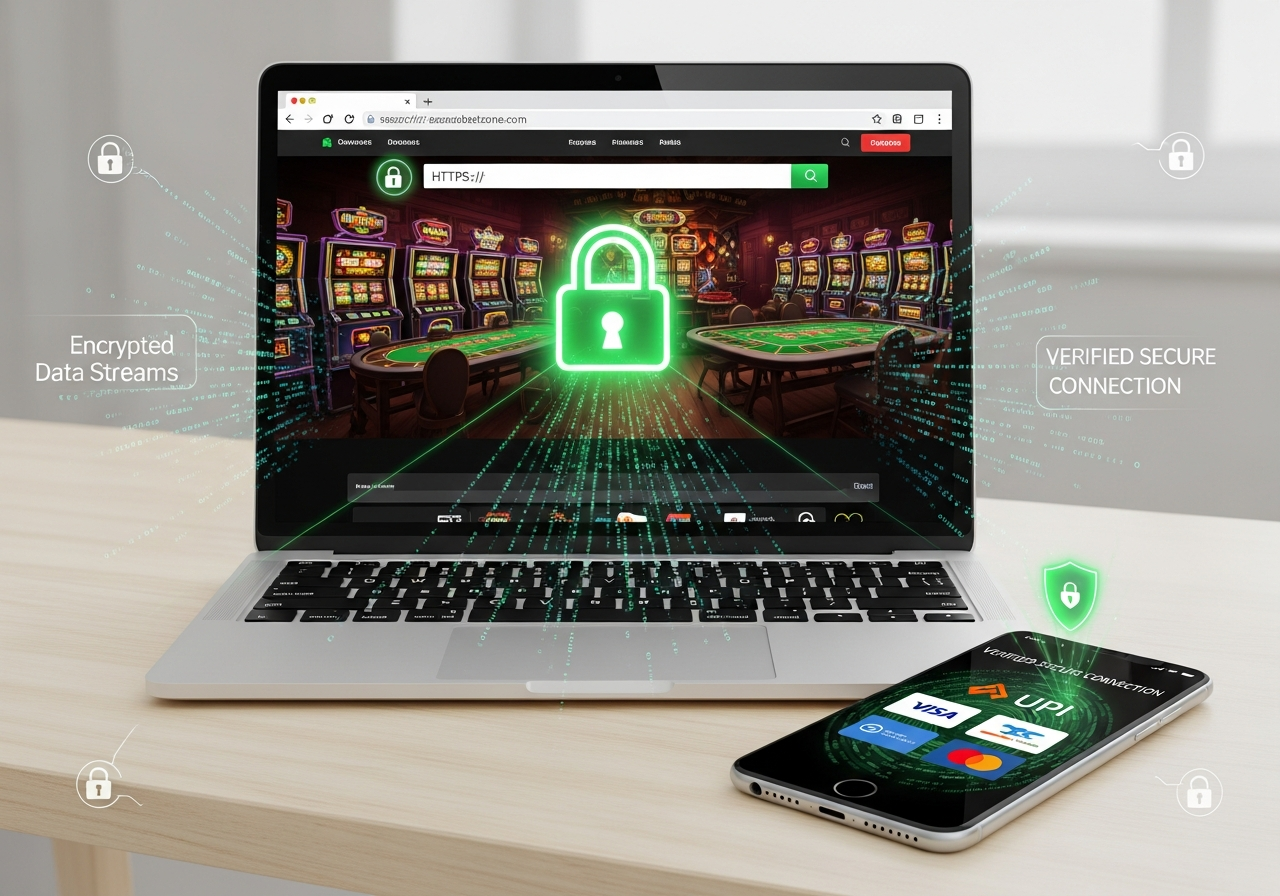
Online gambling in India has grown dramatically over the past five years, with millions of players now depositing through credit cards, UPI, e-wallets and digital payment platforms. At the same time, India’s telecom and financial regulators have intensified their crackdown on illegal gambling and betting websites, blocking thousands of platforms and warning players about unprotected transactions. In this rapidly evolving landscape, understanding SSL encryption—the technical backbone of secure online communication—has become essential. SSL (Secure Sockets Layer) and its modern successor TLS (Transport Layer Security) are the protocols that encrypt sensitive data between your browser and a gambling website’s server, protecting everything from login credentials to payment details and identity verification documents. This article decodes SSL for Indian players in clear, practical terms, shows you how to verify a site’s true security status, and explains why encryption alone cannot guarantee that a website is legal, fair or trustworthy. By the end, you’ll understand how to spot genuine SSL protection, recognize its limitations, and combine certificate checks with regulatory knowledge to make safer choices when gambling online.
What SSL Encryption Does On Gambling Sites
SSL encryption acts as a secure tunnel between your device and the gambling website. When you log in, place a bet, or send your card details, UPI ID, or KYC documents like your PAN or Aadhaar number, that information is transformed into an unreadable code—or ciphertext—that travels safely across the internet. Without SSL, these sensitive details would be transmitted as plain text, vulnerable to interception by malicious actors on public networks or intermediate servers. With SSL active, even if someone were to intercept the data packets, they would see only gibberish unless they possess the decryption key. This is especially critical in India, where many players use cross-border payment gateways, currency conversion, and offshore platforms. An attacker intercepting your UPI ID or card number on an unencrypted connection could impersonate you, drain your account, or commit fraud. SSL ensures that personal and financial data remains private during transit, mimicking the same security standard you expect from your online banking app.
The encryption process works through a combination of mathematical algorithms and digital keys. Think of it like breaking your data into digital bits and scrambling them with a unique key that only the legitimate gambling server possesses. Your browser and the server exchange these keys in a secure handshake before any sensitive data is sent. Once the connection is established, all subsequent communication—login forms, password fields, payment information, and document uploads—flows through this encrypted channel. This is why security guides consistently recommend that you never log in or transact on non-encrypted connections.
How SSL Turns Your Data Into Encrypted “Bits”
SSL uses two types of encryption working in tandem: symmetric and asymmetric. Symmetric encryption uses a single shared key to both lock and unlock data; it’s fast but requires a secure way to exchange the key first. Asymmetric encryption uses a pair of keys—a public key (which anyone can see) and a private key (which only the server has)—to exchange the symmetric key safely. When you visit a gambling site, your browser and the server use asymmetric encryption to exchange a symmetric key, then switch to symmetric encryption for the rest of the session because it’s quicker.
Without dwelling on mathematical complexity, the practical result is simple: your sensitive information becomes unreadable to anyone except the legitimate server. A card number like “4532 1234 5678 9010” might be transformed into a long string of apparently random characters that look like “a7f3k9m2x5q1w8e4r6t2y9u3i5o7p2l4”. The encrypted data travels across potentially dozens of intermediate servers and networks, but none of them can decipher it. Only the gambling platform’s server, which holds the private key, can unlock that encrypted string back into your real card number.
Why Encryption Matters More For Indian Real-Money Play
Indian players face unique encryption challenges compared to users in countries with domestic, tightly regulated gambling operators. Many Indian players use offshore platforms, meaning their data crosses multiple borders and passes through different internet service providers, payment processors, and foreign servers. At each step, an unencrypted connection would expose your banking details to potential theft. Currency conversion adds another layer of complexity; your rupee-denominated payments are being converted to dollars or another currency, multiplying the number of systems handling your data. Without SSL, criminals could intercept that conversion instruction and redirect funds.
Cross-border payments via UPI and card networks are particularly at risk. UPI IDs, in particular, are linked directly to your bank account and personal identity. If an attacker intercepts an unencrypted UPI transaction on an offshore gambling site, they could potentially use that ID to attempt unauthorized transfers or fraudulent payments. Similarly, KYC uploads containing your Aadhaar, PAN, or passport are confidential government documents that, if intercepted, could lead to identity theft or financial fraud. SSL ensures that these documents remain encrypted from the moment you upload them until they are safely stored on the operator’s server.
How SSL Works Behind The Scenes When You Visit A Casino
When you click a link to an Indian gambling site or open a betting app, a series of behind-the-scenes steps occur to establish an encrypted connection. These steps are collectively known as the SSL/TLS handshake. Understanding this process helps you recognize when a secure connection is active and why it matters.
| Step in SSL Handshake | What the Browser Does | What the Gambling Server Does | Impact For Indian Players |
|---|---|---|---|
| 1. Client Hello | Browser sends supported encryption methods, TLS version, and a random number to initiate connection | Server receives the request and prepares to respond | Player’s browser signals it is ready to establish a secure channel |
| 2. Server Hello & Certificate | Browser receives the server’s certificate containing its public key and details about the CA that issued it | Server sends its SSL certificate and selects the strongest encryption method both parties support | Browser begins to verify the site’s legitimacy; certificate contains issuer name crucial for trust |
| 3. Certificate Verification | Browser checks if the certificate is valid, not expired, issued by a trusted CA, and matches the website domain | Server waits for browser to validate | Player’s device confirms the gambling site is who it claims to be; expired or mismatched certs trigger warnings |
| 4. Session Key Exchange | Browser generates a symmetric session key and encrypts it using the server’s public key, then sends it | Server receives the encrypted session key and decrypts it using its private key | Both sides now share a secret key; no attacker can intercept it because it is encrypted with the server’s public key |
| 5. Encrypted Session Begins | Browser switches to encrypted mode; all subsequent data (login, KYC, payment info) is encrypted with the session key | Server also switches to encrypted mode and decrypts incoming messages using the session key | From this point onward, all login credentials, UPI IDs, card numbers, and document uploads travel in encrypted form |
| 6. Session Maintenance | Browser monitors certificate validity and connection status throughout the session | Server rotates session keys periodically and monitors for suspicious activity | Player’s personal and financial data remains protected during the entire betting session, deposit, withdrawal, or account update |
Once the handshake succeeds and the encrypted session begins, every piece of sensitive data you send—your username and password, your card number, your UPI ID, your KYC documents, your bet amounts—is encrypted by your browser before leaving your device. The gambling server receives this encrypted data, decrypts it using the shared session key, and processes your request. The response from the server (confirming your login, your bet placement, your account balance) is also encrypted before traveling back to you.
Key Roles of SSL Certificates and Certificate Authorities
An SSL certificate is a digital document issued by a trusted organization called a Certificate Authority (CA). The CA’s job is to verify that the gambling website is legitimate before issuing the certificate. Major CAs like DigiCert, Sectigo, GeoTrust, and Let’s Encrypt perform background checks, verify domain ownership, and sometimes conduct business validation before issuing a certificate. When your browser receives a certificate from a gambling site, it checks whether that certificate was issued by a CA that the browser trusts.
Most legitimate Indian gambling operators and well-established offshore platforms use certificates from globally recognized CAs. However, some less reputable or illegal gambling sites use certificates issued by obscure or lesser-known CAs, or they issue their own self-signed certificates. A self-signed certificate has no backing from an independent CA, which is a red flag. When you encounter a certificate from an unknown or untrusted CA, your browser typically displays a warning, advising you not to proceed. This is a critical security feature that has prevented countless users from accidentally sharing sensitive data with fraudulent sites.
Spotting Real SSL Protection On Indian Gambling Websites
Identifying genuine SSL protection on a gambling website requires checking several visual and technical markers. The most obvious indicator is the padlock icon and HTTPS URL, but there is more to verify to ensure you are truly on a secure connection.
- Look for HTTPS in the address bar at the top of your browser. If the URL starts with “http://” (without the S), the connection is not encrypted. All login pages, cashier sections, and payment gateways should display “https://” instead. Scroll down on your browser window to confirm the full URL if it is truncated.
- Click the padlock icon next to the URL to view the certificate details. Most modern browsers (Chrome, Firefox, Safari) will display the certificate holder’s name, the CA that issued it, and the expiration date. Verify that the certificate holder’s name matches the gambling website’s official name or parent company.
- Check the certificate’s expiration date. If the certificate has expired, your browser should display a warning, and you should not log in or transact on that site. Expired certificates are often a sign of poor website maintenance or, in some cases, deliberate abandonment of a fraudulent site.
- Verify the Certificate Authority’s name. Well-known CAs include DigiCert, Sectigo, GeoTrust, Comodo, and Let’s Encrypt. If the certificate is issued by a CA you have never heard of, or if it is self-signed, exercise caution. Cross-check the CA name online to confirm its reputation.
- Avoid mixed-content warnings. Some sites load non-sensitive resources (like images or CSS stylesheets) over unencrypted HTTP even while the main page is HTTPS. Your browser might display a warning about “mixed content.” While this is less critical than unencrypted login forms, it indicates sloppy security practices.
- Be aware that some pages, such as the gambling lobby or promotional landing page, might not display a padlock. This is not necessarily a red flag if no sensitive data is collected on those pages. However, the moment you enter a login form, request a withdrawal, or upload KYC documents, the page must switch to HTTPS with a valid certificate.
- On mobile devices or betting apps, look for the same HTTPS indicator in the address bar or search for the padlock icon. Embedded webviews within apps sometimes hide certificate details, but tapping the address bar should reveal the full URL and any security warnings.
Browser and Antivirus Warnings Indian Players Should Not Ignore
Modern web browsers and security software (like antivirus programs) perform automatic certificate checks. If your browser displays a “Your connection is not secure” warning, or if your antivirus software blocks access to a gambling site, take these warnings seriously. Browsers flag connections when the certificate has expired, does not match the domain, is self-signed, or is issued by an untrusted CA. Visiting such a site means your data is not properly encrypted, even if the padlock icon is displayed.
Common warning messages include “NET::ERR_CERT_AUTHORITY_INVALID” (Chrome), “MOZILLA_PKIX_ERROR_SELF_SIGNED_CERT” (Firefox), or “This Connection is Not Private” (Safari). Never ignore these warnings on gambling sites. If you receive such a warning, leave the site immediately and contact customer support to clarify the issue. Legitimate operators will resolve certificate problems within hours or days; persistent warnings are a sign to avoid the platform.
Antivirus programs like Windows Defender, Avast, Kaspersky, and Norton also scan gambling sites for suspicious certificates, phishing attempts, and malware. If your antivirus blocks a site, it has detected a potential threat. This could be a malicious or misissued certificate, compromised server, or fraudulent domain. Do not bypass these warnings to gamble.
Checking HTTPS and Padlock On Mobile Betting Apps
Mobile betting is hugely popular among Indian players, but certificate verification on smartphones requires a slightly different approach. When you visit a gambling site through a mobile browser (Chrome, Safari, or Firefox on your phone), the same HTTPS and padlock indicators apply. Tap the address bar to see the full URL and look for “https://” at the beginning.
Many operators also offer native apps for iOS and Android. These apps communicate with their servers using encrypted protocols similar to HTTPS, but the certificate is validated internally by the app rather than displayed in a browser. Your phone’s operating system (iOS or Android) automatically checks the app’s SSL certificate during communication. If the certificate is invalid or the connection is insecure, the app may display an error message or refuse to connect.
Before depositing on a mobile app, download it directly from the official App Store (Apple) or Google Play (Android), not from third-party sources. Apps distributed through official channels undergo security reviews. If you side-load an app from an unknown source, you bypass these protections and risk installing a fake or compromised version that could steal your login credentials.
What SSL Protects On Indian Betting Sites: Logins, Payments, KYC
SSL encryption safeguards specific categories of sensitive data that are unique to the gambling experience. Understanding what SSL protects helps you recognize which transactions and interactions must be encrypted.
| Data Type | Real-World Example in India | Risk Without SSL | How SSL Minimises the Risk |
|---|---|---|---|
| Account Login Credentials | Username and password used to access your betting account | An attacker on public Wi-Fi intercepts your password and logs in as you, stealing your account and any balance | Your password is encrypted before transmission; intercepted packets contain only gibberish that cannot be decrypted without the session key |
| Debit and Credit Card Details | Card number, expiry, and CVV sent during deposit or withdrawal | Cybercriminal captures card details and uses them fraudulently on other websites or at offline merchants | Card data is encrypted; even if captured, it cannot be read or used without the encryption key held only by the server |
| UPI IDs and Phone Numbers | UPI ID like “yourname@bank” and mobile number linked to your bank account | Attacker intercepts your UPI ID and phone number, attempts unauthorized UPI transfers or redirects OTP messages | UPI ID and phone are encrypted; intercepted data cannot be used to initiate fraudulent transfers because the attacker cannot decrypt it |
| E-Wallet and Digital Payment Details | Paytm, PhonePe, Google Pay, or Amazon Pay login information used to deposit | Credentials are stolen and used to drain your e-wallet account | Payment app credentials are encrypted during transit to the gambling site, protecting them from interception |
| KYC Document Uploads | Aadhaar, PAN, passport scans, or selfies uploaded for identity verification | Documents are stolen and used for identity fraud, opening fake accounts at banks or telecom companies in your name | Documents are encrypted before upload and during storage on the server; interception yields only encrypted files that are worthless to a criminal |
| Bet History and Account Balance | Records of your previous bets, winnings, losses, and current account balance | Information is used for blackmail, or an attacker modifies bet history to dispute transactions | Bet data is encrypted, preventing unauthorized viewing or modification by third parties |
| Withdrawal Instructions and Bank Details | Bank account number and IFSC code provided for withdrawals | Bank details are compromised; an attacker redirects your withdrawal to their own account | Bank details are encrypted; redirecting a withdrawal requires access to the encrypted data, which is impossible without the decryption key |
RTP, RNG and SSL: Different Layers of Safety
It is important to understand that SSL protects data in transit—between your device and the server—but it does not verify game fairness. Game fairness is determined by the Random Number Generator (RNG) and Return To Player (RTP) percentage, which are controlled by the gambling software, not by SSL.
A site can have perfect, industry-leading SSL encryption and still be completely unfair or rigged. Conversely, a site with weak SSL is clearly insecure, but strong SSL encryption alone does not make it fair or legal. Think of SSL as the lock on the front door of a casino; a strong lock keeps thieves out, but it does not determine whether the games inside are fair or whether the casino is licensed. For complete safety, you must verify SSL (secure transport), game fairness (RNG/RTP certification), legality (Indian or recognized international license), and operator reputation (user reviews, payment reliability).
Limits of SSL: Why a Padlock Doesn’t Guarantee a Legal or Fair Site
While SSL is essential for protecting your data, the presence of a padlock icon and HTTPS can create a false sense of security. Academic research into gambling-site certificates has revealed that many illegal, unfair, or fraudulent gambling platforms use strong SSL encryption that looks legitimate to browsers. A padlock does not verify legality, fairness, consumer protection, or regulatory compliance; it only confirms that the connection between your browser and the server is encrypted.
- SSL protects data in transit but does not ensure the site is legal in India or regulated by recognized authorities.
- A site with a valid certificate from a major CA could still be unlicensed, unfair, or operated by criminals.
- Encryption does not prevent the operator from stealing your money, refusing withdrawals, or disappearing with your balance.
- SSL does not protect you against scams like fake bonus offers, manipulation of odds, or rigged games.
- A padlock can actually mask dangerous sites; criminals use legitimate certificates to appear trustworthy while operating fraudulent platforms.
- Relying solely on SSL without checking licensing, regulatory status, and user reviews leaves you vulnerable to financial loss.
- Some blocked gambling sites in India had perfect SSL certificates but violated national laws or failed to protect customer funds.
Malicious Certificates and Man-in-the-Middle Scenarios
In rare but critical cases, attackers can exploit certificate trust through what is called a man-in-the-middle (MITM) attack. This occurs when an attacker intercepts the connection between your browser and the gambling site and impersonates the site by presenting a certificate that looks valid but is actually controlled by the attacker.
One scenario is a compromised public Wi-Fi network, such as at a café or airport. When you connect to such networks, a malicious actor could intercept your traffic and present a fake certificate. Modern browsers are highly resistant to this because they check certificate chains and validate signatures, but misconfigured certificates or very old browsers might be fooled. To minimize this risk, avoid logging into gambling accounts on public Wi-Fi without a VPN. A VPN (Virtual Private Network) adds an additional layer of encryption on top of HTTPS, protecting your data even if the Wi-Fi network is compromised.
Another scenario involves a certificate issued to an attacker through a compromised or less vigilant Certificate Authority. If a CA is breached or tricked into issuing a certificate to a fraudulent applicant, that attacker can decrypt traffic destined for the legitimate gambling site. This is extremely rare for major CAs, but it has happened historically. To mitigate this risk, websites use additional security mechanisms like HSTS (HTTP Strict Transport Security) and certificate pinning, which force browsers to accept only specific certificates even if others exist.
Unknown Root CAs on Offshore Gambling Platforms
Some offshore gambling operators, especially those based in jurisdictions with lax regulations, use certificates issued by lesser-known or unknown CAs. While a lesser-known CA might be perfectly legitimate, it is a yellow flag. When you click the padlock and see that the certificate is issued by an authority you have never heard of, research that CA. Is it listed in browser trust stores? Is it recognized by international standards organizations?
Known reputable CAs like DigiCert, Sectigo, Let’s Encrypt, and Comodo are household names in security because they operate transparently and undergo regular audits. Lesser-known CAs might charge lower prices, have fewer vetting requirements, or operate in jurisdictions outside Western regulatory frameworks. While not all unknown CAs are malicious, they represent higher risk. When choosing between two gambling sites with otherwise similar features, prefer the one using a certificate from a globally recognized CA. This indicates the operator invests in legitimate security infrastructure and is likely operating a serious, long-term business rather than a fly-by-night scam.
SSL Encryption and India’s Crackdown on Illegal Gambling Websites
India’s Telecom Regulatory Authority (TRAI) and the Department of Telecommunications have been actively blocking illegal gambling and betting websites in recent years. Thousands of domains have been added to blocklists distributed to internet service providers across India. This crackdown is significant because it underscores that SSL encryption alone is not a measure of legality or legitimacy.
| Website Type | Typical Use of SSL | Regulatory Status in India | Risk Level for Players |
|---|---|---|---|
| Licensed Domestic Operator | Strong modern TLS (1.3), reputable CA, properly maintained certificates | Compliant with local gaming laws and tax obligations; licensed by state authorities | Low risk; operator operates transparently and has legal recourse framework |
| Recognized International Operator | Strong TLS, reputable CA, international compliance | Licensed in recognized jurisdictions (Malta, UK, Gibraltar) but may face restrictions in India | Medium risk; technically secure but legally ambiguous; disputes may be unresolvable |
| Offshore Unlicensed Site | Often strong SSL, sometimes lesser-known CA | Unregulated; targeted by Indian blocking but still accessible via VPN or DNS changes | High risk; no legal protection; operators can disappear without refunding players |
| Blocked Illegal Betting Site | Previously had strong SSL (before blocking) | Explicitly illegal in India; operated outside any regulatory framework | Very high risk; funds are unrecoverable; site can vanish overnight; customer data is vulnerable to misuse |
| Fraudulent/Scam Site | May have weak or self-signed SSL; sometimes impersonates legitimate operators | Illegal; designed specifically to steal money or personal information | Critical risk; deposits are theft; identity documents can be used for fraud |
Many of the gambling sites blocked by TRAI in India had valid, secure SSL certificates issued by reputable CAs. The blocks were issued not because the sites lacked encryption, but because they violated Indian law, failed to comply with taxation requirements, or operated without adequate consumer protection measures. This demonstrates that SSL security and legal compliance are entirely separate dimensions.
Why Even “Secure” Offshore Sites Can Be Blocked
Offshore operators targeting Indian players often maintain impeccable SSL infrastructure. They use modern TLS versions, strong ciphers, and certificates from tier-one CAs. From an encryption standpoint, your data is just as safe on such a site as it would be on a domestic operator. However, Indian regulators do not distinguish between secure and insecure offshore operators; the focus is on legality, consumer protection, and taxation. An offshore site that fails to:
- Comply with Indian tax regulations
- Implement responsible gambling safeguards
- Process KYC verification reliably
- Maintain transparent dispute resolution
- Protect customer funds in segregated accounts
…will be blocked, regardless of its SSL strength. Moreover, if you deposit money on an offshore platform that is later blocked, you may lose access to your account. If a dispute arises—such as a delayed withdrawal or a claim that your account was hacked—there is no Indian court or regulatory body to appeal to. Your only recourse is international arbitration, which is expensive and slow. Therefore, combining SSL checks with legal and licensing checks is essential.
Practical Security Checklist for Indian Players Before Depositing
Before you deposit money on any gambling site, run through this step-by-step checklist to verify both technical security and operational trustworthiness.
- Verify that the website displays “https://” in the address bar and a padlock icon. Do not proceed to the login or cashier page if the connection is not encrypted.
- Click the padlock icon and check the certificate details. Confirm that the certificate is issued to the correct domain (matching the site’s name), is not expired, and is issued by a reputable CA such as DigiCert, Sectigo, or Let’s Encrypt.
- Clear your browser cache and cookies before logging in, especially if you have accessed similar-looking gambling sites previously. This reduces the risk of logging into a phishing clone by mistake.
- Avoid logging in or transacting on public Wi-Fi networks without a VPN. If you must use public Wi-Fi, enable a reputable VPN (such as Surfshark, ExpressVPN, or Mullvad) before accessing your account.
- Confirm the site’s licensing and regulatory status by looking for a license number and issuing authority on the footer of the website. Cross-check the license number with the official regulator’s website (e.g., Malta Gaming Authority, UK Gambling Commission) to ensure it is genuine.
- Research the operator’s reputation by reading independent reviews on forums like Reddit, AskGamblers, or Trustpilot. Look for patterns of complaints about withdrawals, account closures, or poor customer service.
- Test customer support before depositing. Contact support via email or chat with a simple question and evaluate the response time and quality. If the operator is unresponsive or dismissive, consider it a warning sign.
Advanced Certificate Checks for Security-Conscious Bettors
For users who want to delve deeper into certificate validation, browsers and online tools offer advanced inspection capabilities. In Chrome, Firefox, or Safari, you can right-click on the padlock icon and select “Certificate” or “Connection Info” to view the full certificate chain. The certificate chain shows all the CAs involved in validating the certificate, from the root CA (the ultimate trusted authority) down to the specific certificate for the gambling site.
Technically sophisticated users can also use online certificate transparency tools like crt.sh or Google’s Certificate Transparency logs to search for all certificates ever issued to a domain. This reveals whether the operator has ever issued certificates from unusual CAs, or if a domain has been re-registered with new certificates after a lapse. Unusual certificate patterns can indicate a site that has been compromised, rebranded after being blocked, or is impersonating a legitimate operator.
Certificate signature algorithms should be strong; look for SHA-256 or higher. Older algorithms like MD5 or SHA-1 are considered weak and are phased out by major CAs. Key size should be at least 2048 bits for RSA encryption. These technical details are visible in the certificate view; they provide additional assurance that the site is using modern, industry-standard encryption rather than cutting corners.
Common Red Flags on “Secure” But Risky Gambling Sites
Even if a site displays a valid HTTPS connection and a legitimate certificate, watch out for these behavioral and design red flags that suggest the site is unreliable or fraudulent:
- Aggressive or unrealistic bonus offers (e.g., 500% welcome bonuses with no conditions) are often used to lure new players who then cannot withdraw winnings.
- Unclear or overly complex Terms and Conditions, especially regarding withdrawal eligibility, wagering requirements, or account suspension policies.
- Lack of clear KYC (Know Your Customer) verification process or requests for documents only after a player tries to withdraw.
- Slow or unresponsive customer support, particularly when inquiries relate to withdrawals or account issues.
- Missing or vague information about the operator, such as no company registration number, no physical address, or no named management team.
- Delayed or refused withdrawals with vague reasons, or repeated requests to provide the same documentation multiple times.
- No clear responsible gambling tools, such as deposit limits, loss limits, self-exclusion options, or links to gambling addiction resources.
- Pressure tactics in promotions or customer communications that discourage players from withdrawing funds.
SSL Encryption and India’s Crackdown on Illegal Gambling Websites
India’s regulatory environment around online gambling is evolving rapidly. While some states have legalized certain forms of gambling (such as Telangana legalizing online poker), the central government and most states restrict or ban online betting entirely. The Telecom Regulatory Authority (TRAI) publishes regular blocking orders targeting illegal gambling and betting websites. These blocks are enforced at the ISP level, preventing Indian users from accessing the blocked domains directly; however, users can still reach blocked sites via VPNs, proxy servers, or by changing DNS settings.
The existence of SSL encryption on a blocked site does not prevent its blocking, nor does blocking protect a player’s funds if they have already deposited. In fact, relying on SSL as a measure of a site’s legitimacy in India is dangerous because many blocked, illegal, or scam sites had impeccable SSL certificates. The only protection against regulatory action is to use operators that are explicitly compliant with Indian law or licensed in recognized international jurisdictions that maintain cooperative relationships with Indian regulators.
Practical Security Checklist for Indian Players Before Depositing
Before depositing any amount on a gambling site, implement this structured checklist that combines technical SSL verification with broader due diligence. This approach ensures that you are not only on an encrypted connection but also on a trustworthy, legally compliant platform.
Advanced Certificate Checks for Security-Conscious Bettors
For users who want to delve deeper into certificate validation, browsers and online tools offer advanced inspection capabilities. In Chrome, Firefox, or Safari, you can right-click on the padlock icon and select “Certificate” or “Connection Info” to view the full certificate chain. The certificate chain shows all the CAs involved in validating the certificate, from the root CA (the ultimate trusted authority) down to the specific certificate for the gambling site.
Technically sophisticated users can also use online certificate transparency tools like crt.sh or Google’s Certificate Transparency logs to search for all certificates ever issued to a domain. This reveals whether the operator has ever issued certificates from unusual CAs, or if a domain has been re-registered with new certificates after a lapse. Unusual certificate patterns can indicate a site that has been compromised, rebranded after being blocked, or is impersonating a legitimate operator.
Common Red Flags on “Secure” But Risky Gambling Sites
Even if a site displays a valid HTTPS connection and a legitimate certificate, watch out for these behavioral and design red flags that suggest the site is unreliable or fraudulent:
- Aggressive or unrealistic bonus offers (e.g., 500% welcome bonuses with no conditions) are often used to lure new players who then cannot withdraw winnings.
- Unclear or overly complex Terms and Conditions, especially regarding withdrawal eligibility, wagering requirements, or account suspension policies.
- Lack of clear KYC (Know Your Customer) verification process or requests for documents only after a player tries to withdraw.
- Slow or unresponsive customer support, particularly when inquiries relate to withdrawals or account issues.
- Missing or vague information about the operator, such as no company registration number, no physical address, or no named management team.
- Delayed or refused withdrawals with vague reasons, or repeated requests to provide the same documentation multiple times.
- No clear responsible gambling tools, such as deposit limits, loss limits, self-exclusion options, or links to gambling addiction resources.
- Pressure tactics in promotions or customer communications that discourage players from withdrawing funds.
Best Practices for Indian Gambling Operators Implementing SSL
Gambling operators that operate legally in India or target Indian players responsibly prioritize SSL and certificate management as a cornerstone of their technical security infrastructure. Implementation best practices include:
| Implementation Practice | Benefit for Players | Regulatory / Compliance Advantage | Risk if Ignored |
|---|---|---|---|
| Use TLS 1.3 (latest standard) | Faster, more secure encrypted connections; reduced vulnerability to known exploits | Demonstrates commitment to modern security standards; aligns with global best practices | TLS 1.0 or 1.1 are deprecated; continued use invites regulatory criticism and player distrust |
| Issue certificates from globally recognized CAs | Players can verify legitimacy independently; reduced risk of man-in-the-middle attacks | Operators appear professional and trustworthy; aligns with international banking and finance standards | Unknown or self-signed certificates trigger browser warnings; players lose confidence; potential regulatory penalties |
| Implement HSTS (HTTP Strict Transport Security) | Prevents players from accidentally accessing unencrypted versions of the site (even if they type http:// instead of https://) | Ensures players are always on encrypted connections; reduces phishing and data interception risks | Absence of HSTS allows downgrade attacks; attackers can strip encryption and intercept data |
| Rotate certificates before expiration | Continuous, uninterrupted encrypted service; no sudden “connection not secure” warnings that confuse or alarm players | Demonstrates operational excellence; avoids service disruptions and player complaints | Expired certificates trigger security warnings; players cannot access accounts; deposits and withdrawals are blocked; reputation damage and regulatory scrutiny |
| Monitor certificate validity and issuer reputation | Early detection of certificate compromises or CA breaches; maintains player trust | Operators can respond to issues before they affect players; compliance with security audit requirements | Undetected certificate issues remain in place indefinitely; player data is vulnerable; breach or compromise becomes catastrophic |
| Segment SSL by domain and security level | Sensitive pages (login, cashier, KYC upload) use the strongest certificates; non-sensitive content may be served faster on separate CDNs | More granular security posture; easier to pass security audits and compliance checks | Weaker segments may become vectors for phishing or data exfiltration; inconsistent security invites attacks |
| Integrate SSL with secure payment gateways | Players are confident that payment data is encrypted at every step (browser → operator → payment processor → bank); reduces fraud | Payment processors demand strong SSL; operators without it are rejected by major processors | Weak SSL integration allows payment data leakage; payment processors drop the operator; PCI DSS compliance is impossible; chargebacks and fraud increase |
| Conduct regular certificate audits and penetration tests | Vulnerabilities in certificate configuration or chain validation are identified and fixed; players remain protected | Operators can provide audit reports to regulators and reassure investors; demonstrates diligence in security | Undetected vulnerabilities accumulate; eventually result in breaches that expose player data; regulatory action and financial penalties |
Aligning SSL With Wider Security and Responsible Gambling Policies
SSL encryption should not exist in isolation. The most trustworthy gambling operators in India integrate SSL with a broader ecosystem of security, compliance, and responsible gambling practices. SSL protects data in transit, but responsible operators also implement:
Secure payment gateways that separate sensitive payment data from the main gambling platform, so even if the gambling site is compromised, payment information is isolated. Robust KYC (Know Your Customer) and AML (Anti-Money Laundering) processes that verify player identity and prevent fraud without creating unnecessary data risks. Data minimization policies that limit collection and retention of personal information, reducing the potential impact of a future breach. Responsible play tools integrated into the platform—deposit limits, loss limits, time-out periods, and self-exclusion options—that help players gamble within their means. Regular security audits and penetration testing by independent third parties, with public disclosure of results or compliance certifications. Clear privacy policies that explain how player data is used, stored, and protected, with explicit statements that data will not be sold to third parties. Transparent dispute resolution mechanisms so that if a player disputes a transaction or account closure, there is an independent arbitration process.
When all these elements are in place alongside strong SSL encryption, players have genuine protection: their data is secure in transit (SSL), stored safely on protected servers, used responsibly by the operator, and protected by clear recourse mechanisms if something goes wrong. This holistic approach is the gold standard for trustworthy online gambling in India.
Understanding SSL encryption is the first step toward safe online gambling. By learning how to spot HTTPS connections, verify certificates, and recognize the limits of encryption, you equip yourself to make informed decisions. Combined with checks on legality, licensing, and operator reputation, SSL verification becomes part of a comprehensive due diligence process that dramatically reduces your risk of falling victim to fraud, data theft, or unscrupulous operators. Take the time to verify security before you deposit; your financial and personal safety depend on it.